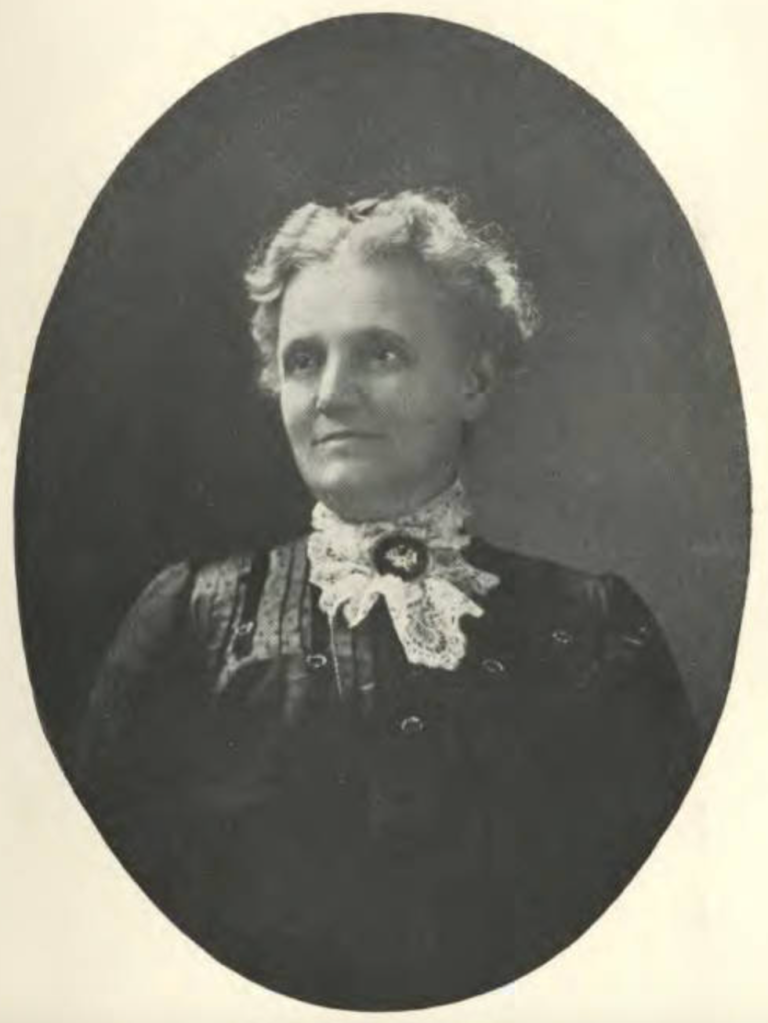
Women have always been part of the story of Bethel University. While Bethel has long recognized John Alexis Edgren as its founder, that Baptist pastor-scholar only left Sweden in 1870 because his American wife, Annie, was seeking health care in her native land. After Edgren founded a small theological school in Chicago the following year, his wife “was said to have been nurse and mother” to many of the young male students. When Edgren’s seminary temporarily relocated to St. Paul for the 1884-85 academic year, his daughter, Julia, became the first woman on the Bethel faculty, teaching courses in history and music.1
By that point, what later became Bethel University was already coeducational. Elizabeth Johnson had been the first woman to enroll in 1879, preparing for her career as a home missionary among fellow Swedish immigrants in cities like Chicago, Minneapolis, and New York. Three more women studied at Edgren’s peripatetic seminary during the last years of his increasingly difficult tenure. Women mostly disappeared from that student body under Edgren’s successor, Carl Gustaf Lagergren, but when Swedish Baptists founded Bethel Academy in 1905, that secondary school not only enrolled girls but employed women teachers like Ruth Sandvall (English).2 The Seminary and Academy merged in 1914, moving together onto a new campus on St. Paul’s Snelling Avenue. After Lagergren retired eight years later, Bethel president G. Arvid Hagstrom added a new unit to the Seminary: a two-year Bible and Missionary Training School that primarily drew women as students. By 1924 its director was Esther Sabel, who continued to teach Bible and other subjects long after the missionary school was absorbed by the new Junior College in 1935.3
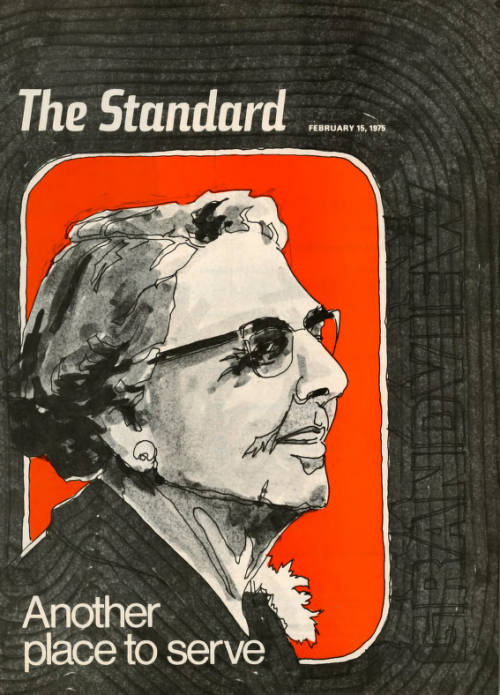
“I will miss you more than any other one faculty member will miss you,” Effie Nelson wrote Sabel when the latter retired in 1958, “because we have fought together for women’s rights on the campus for the greatest number of years.”4 Already a German professor and librarian, Nelson became dean of women in 1937 and founded the Bethel Women’s Association, whose worship services, teas and banquets, and “Big and Little Sisters” program were meant “to create a feeling of unity and common aim among the single students living off and on campus, married women, faculty women, and faculty wives — realizing the tremendous influence of Christ-centered lives upon each other.”5 No one saw more clearly than Nelson both the importance of women to Bethel’s mission and community and the need for those women to band together in the face of the limitations placed on their presence and participation.
In 1937 Nelson, Sabel, and just two other women appeared in the faculty and staff section of the Bethel yearbook; none served in the academic administration. Special academic honors that year went to Lois Sorley (Seminary) and Luetta Schmidt (College), but The Spire still depicted majorities of male students: about 80% in the Seminary and 55% in the College.6 Women students briefly overtook men during World War II, but the old gender gap returned and expanded when Bethel College became a four-year institution in 1947, as dozens of male veterans took advantage of their G.I. Bill benefits.7 Across the first five senior classes, just 28% of the graduates were women.8
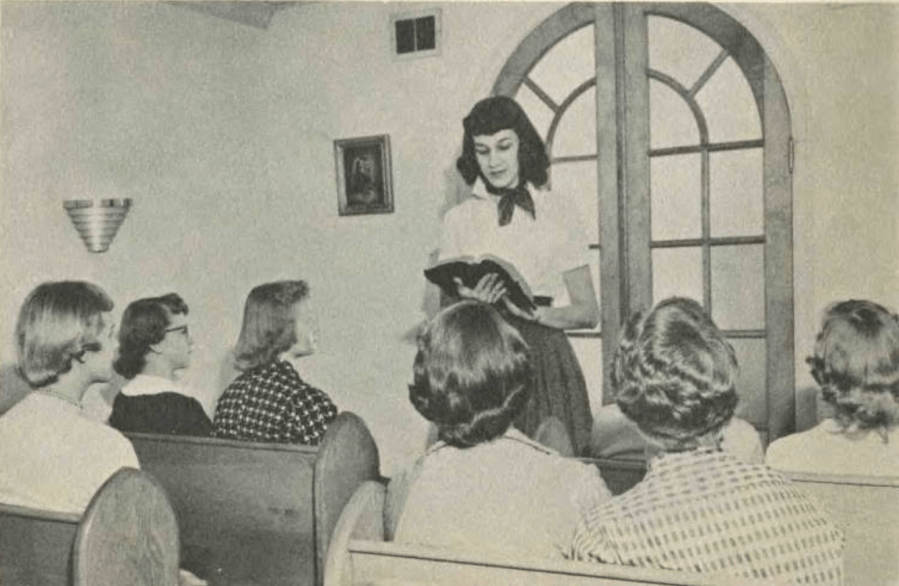
But women accounted for 40% of College students as Carl Lundquist became president in 1954, and they reached parity with men in 1964 — fifteen years before women did so nationwide in American colleges and universities.9 By the 1960s, surging enrollment had convinced the Baptist General Conference (BGC) to acquire for Bethel a new lakeside campus in the suburb of Arden Hills. Some of its 200 acres were cleared by Busy Beth, a tractor paid for by funds raised by the Bethel Women’s Federation, a BGC auxiliary whose members no longer canned fruit for students but still baked cookies and sewed dish towels for them.10 When the Seminary first held classes in Arden Hills in 1965, just four of its 110 students were women, but the first College building (1968) was a dormitory named for Effie Nelson.11 When the College community walked from the Old Campus to the New to start the 1972-1973 year, 53% of its students and 11% of its (full-time) faculty were women.12 After the first twenty-five years in Arden Hills, the former figure had risen another ten points, prompting the administration to form a task force on “gender balance.”13
“…even though women have made progress [at American colleges and universities] during the 1970s and 1980s, men still serve as the educational norm by which women are evaluated. Institutions have yet to really reflect the life experiences of women or to recognize their full humanity.”14
Carol Pearson, Donna Shavlik, and Judith Touchton (1989)
Since Bethel resettled in Arden Hills and became a university (in 2004), women have played increasingly prominent roles on campus. They still make up the majority of traditional undergraduates (56.5% in 2023-24) and now compete in as many NCAA sports as their male peers. The new gender gap is still larger in Bethel’s adult undergraduate (63.4% women) and graduate (73.1%) programs, and even the Seminary’s student body recently became majority-female.15 The women’s share of the full-time faculty cleared the 50% threshold in 2018. Over the same period, Bethel hired the first women to serve as vice president (Judy Moseman, 1987), dean of academic programs (Tricia Brownlee, 1991), dean of campus ministries (Laurel Bunker, 2008), and provost (Deb Harless, 2013), and Julie White became the first woman to chair the Board of Trustees. “Bethel was a really freeing place for me,” recalled Harless. As a Bethel undergraduate and professor, she found herself “surrounded by people” — men, as well as women — who encouraged women, as well as men, to “learn who you are, learn how God’s created you, what are you passionate about, how’s he calling you.”16
Yet some glass ceilings remain unbroken. Bethel has yet to name its first woman president, a precedent that two other Christian universities, Baylor (2017) and Lipscomb (2021), set on either side of Bethel hiring Ross Allen for that role in 2020. Women hoping to enter pastoral ministry after graduating from Bethel still find scarce opportunities in the university’s own denomination. Many of the ambiguities and tensions found in the women’s history of Bethel will sound at least somewhat familiar to the women of present-day Bethel.
Women have always been part of the story of Bethel University. But they have typically played only supporting roles in the written histories of Bethel. For the school’s 125th anniversary, for example, G.W. Carlson and Diana Magnuson had to admit that “space precludes a more detailed analysis of” gender equity, among other topics, “a project that will be left to future historians.”17 This digital project represents the first attempt to tell the Bethel story with its women at its center, timed to coincide with the fiftieth anniversary of the United Nations’ International Women’s Year.18
There are many ways to engage with the Women of Bethel project:
• If you want a linear narrative that expands on this introduction’s summary, explore a three-part set of multimedia timelines, covering the origins and early years of Bethel (before 1914), the era on Snelling Avenue (1914-1972), and the more recent period in Arden Hills (1972-present);
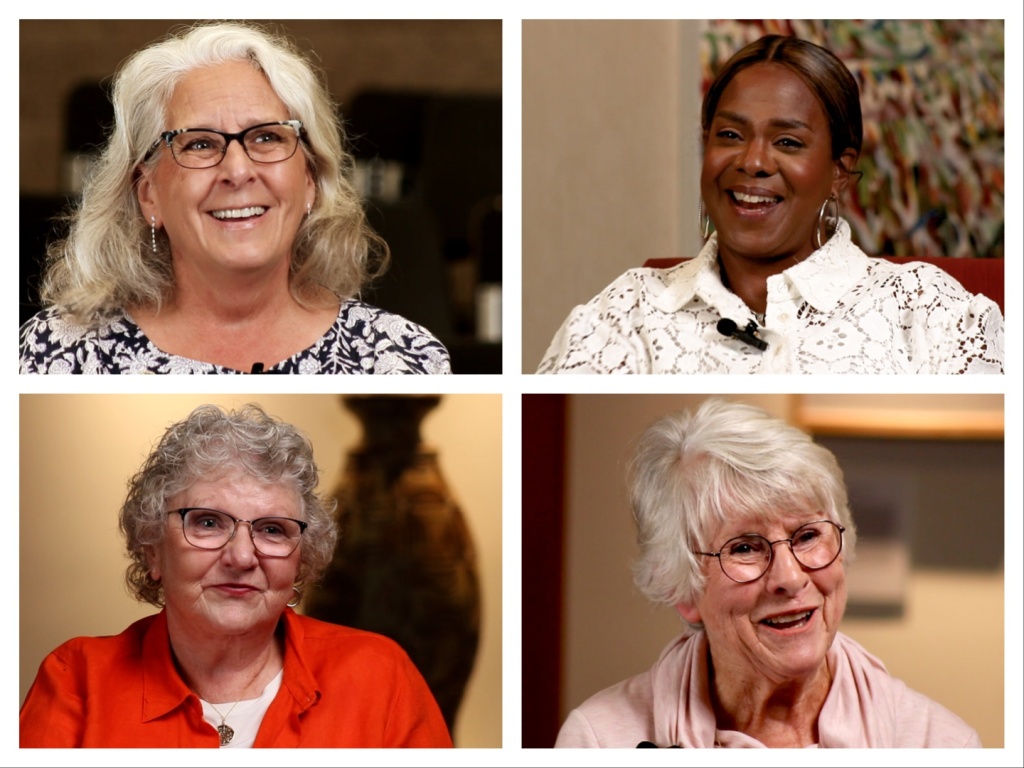
• To encounter the stories of individual women, watch any of the thirty-four oral history interviews we recorded in the summer of 2024, or read and pray through a series of daily devotions written by Bethel women for Women’s History Month in March 2025;

• Go down the rabbit hole of the research blog I started during my Fall 2024 sabbatical, where you’ll find everything from reflections on historiography and methodology to first drafts of later essays to eulogies for three Bethel women who died while I was working on the project: former First Lady Darleen Brushaber and professors Leta Frazier (Communication Studies) and Dottie Haugen (Physical Education).
But the interpretive centerpiece of The Women of Bethel is a series of four longer essays exploring themes in the modern women’s history of Bethel University. More episodic than comprehensive, the essays survey larger arguments over gender roles, zero in on those debates as they related to Christian ministry, examine policies related to equal pay, sexual harassment, and maternity leave, and chart the remarkable transformation of women’s sports at Bethel. Finally, a brief conclusion suggests directions for further research.
Each essay touches on earlier decades in Bethel history, in order to offer a wider historical perspective on more recent developments. However, our focus is on the Arden Hills era. Since 1972 was also the year that the U.S. Congress sent the Equal Rights Amendment to the states and enacted Title IX, telling that modern story of Bethel gives us a chance to see how one Christian university reflected — and sometimes rejected — the influences of a society that was reconsidering the role women would play everywhere from the home and the workplace to schools, sports, and churches.
Still, I’m less interested in abstract debates about theology, policy, and curriculum than in the embodied experiences of complicated people. Men play supporting roles in our narrative — often encouraging women; sometimes obstructing or mistreating them. But above all, The Women of Bethel is about the women who have studied at Bethel and served that university.
It’s not just one story, but many. “The women of Bethel” is itself a diverse category; I’ll primarily focus on students, alumnae, professors, administrators, and staff in roles ranging from coaching to residential life, but we may also expect to encounter trustees, donors, church constituents involved in organizations like the Women’s Federation, and spouses of students and employees. By turn these women’s Bethel stories have been inspiring, infuriating, and incomplete — and sometimes they stand in tension with each other.
It’s an honor and privilege to share some of those stories with you and, hopefully, to encourage further storytelling and scholarship in the years to come.
Christopher Gehrz, professor of history
Pentecost 2025
Introduction | Debating Gender | Women in Ministry | Policies and Persons
Women and Sports | Conclusion

Acknowledgments
Just as I hope to facilitate future research and writing on this topic, let me acknowledge that my own research was only possible thanks to the efforts and encouragement of many other people: Bethel archivist Rebekah Lopez and her predecessors, Diana Magnuson and Norris Magnuson, who have so diligently curated written and other artifacts of our institutional history, and the Friends of the History Center who support our archives; Kari Jagusch and her predecessor, Kent Gerber, who have made our digital library an indispensable resource; previous Bethel historians like Adolf Olson and Virgil Olson, Norris and Diana Magnuson, and my mentor, G.W. Carlson; my student Ellie Heebsh and my colleague Sam Mulberry, who collaborated with me on our oral history project, and the Edgren Scholars Committee members who approved it; the thirty-four women who took part in our oral history interviews, plus more than twenty others who answered questions by email and Zoom; Bethel’s Sabbatical Committee and provost Robin Rylaarsdam, who approved the Fall 2024 leave that made this project possible; AnneMarie Kooistra and Sara Shady, fellow members of Bethel’s Department of History, Philosophy, and Political Science (HiPPoS) who offered feedback on essay drafts; Beth Allison Barr, Kristin Kobes Du Mez, Andrea Turpin, Agnes Howard, Melissa Borja, and Nadya Williams, former blogging partners who helped sparked my interest in women’s history; Austin Lagesse, who helped me pull together a timeline of women’s athletics, and Tom Yenter, who shared advice on working with the IPEDS database at the U.S. Department of Education; Dan Nelson and Jeff Olson, who supplied me with enrollment data going back to the mid-1960s; and everyone who shared comments and reminiscences via blog comments, social media, and email.
Cover Image
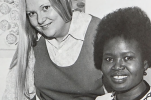
This yearbook photo comes from 1972-1973, the first year Bethel College students studied on the new campus in Arden Hills, Minnesota. Connie Larson (left) was a Social Science major from Isle, Minnesota who went on to work as a librarian at Bethel. Peninah Apela (right) returned to Nairobi, Kenya after completing her degree in English. Image courtesy of the Bethel Digital Library.
About the Author
Chris Gehrz is professor of history and co-chair of the Department of History, Philosophy, and Political Science at Bethel University. A native of Stillwater, MN who studied history at the College of William and Mary (A.B., 1996) and Yale University (PhD, 2002), Gehrz returned to the Twin Cities in 2003 to teach at Bethel. He is the author or editor of six books, including The Pietist Vision of Christian Higher Education: Forming Whole and Holy Persons (IVP Academic, 2015) and Charles Lindbergh: A Religious Biography of America’s Most Infamous Pilot (Eerdmans, 2021), and College for Christians, a guide to higher education for Christian families (published at Substack in 2024-25).
NOTES
- Adolf Olson, A Centenary History, As Related to the Baptist General Conference of America: “A Century of God’s Grace,” 1852-1952 (Baptist Conference Press, 1952), 158, 165-66; Norris A. Magnuson, Missionsskolan: The History of an Immigrant Theological School; Bethel Theological Seminary, 1871-1881 (Bethel Theological Seminary, 1982), 47. ↩︎
- Adolf Olson and Virgil A. Olson, Seventy-Five Years: A History of Bethel Theological Seminary, 1871-1946 (Conference Press, 1946), 21-23; Bethel Academy, 1906-1907 Catalog, 7. ↩︎
- Olson and Olson, Seventy-Five Years, 56-57; G. William Carlson and Diana L. Magnuson, Persevere, Läsare, Clarion: Celebrating Bethel’s 125th Anniversary (Bethel College and Seminary, 1997), 33. ↩︎
- Quoted in Carlson and Magnuson, Persevere, Läsare, Clarion, 35. ↩︎
- Effie Nelson, “History of B.W.A.” (1962), Effie Victoria Nelson Papers, Box 1, The History Center: Archives of Bethel University and Converge (hereafter HC). ↩︎
- Bethel Institute, 1937-1938 Yearbook, 5-12. The Academy had closed in 1936. ↩︎
- As late as 1952, military veterans accounted for 21% of Bethel’s enrollment; Bethel College and Seminary report in Baptist General Conference of America (BGC), 1951-1952 Annual, 100. According to the leading historian of American colleges and universities, “one effect of the GI Bill was to masculinize the postwar campus—both in terms of the sheer numbers of new male students matriculating, and by intensifying the split between the typically male fields of study and those now deemed appropriate for women”; John R. Thelin, A History of American Higher Education, 3rd ed. (Johns Hopkins University Press, 2019), 267. ↩︎
- Bethel College and Seminary report in BGC, 1953-1954 Annual, 106. ↩︎
- The Clarion, October 9, 1953, 3. (“As usual,” added the anonymous student reporter, “the men practically crowd out the fair sex in the seminary. There are four ‘brave’ women among the 155 masculine seminarians.”) The 1964 figure is taken from an enrollment study provided by Dan Nelson, email to author, April 25, 2025. For more on the history of women’s enrollment at Bethel, see this May 13, 2025 blog post. National enrollment data for higher education in this era can be found in 120 Years of American Education: A Statistical Portrait, ed. Thomas D. Snyder (National Center for Education Statistics, 1993), ch. 3. ↩︎
- The [BGC] Standard, June 20, 1966, 20. ↩︎
- October 1965 enrollment report, Bethel Theological Seminary Collection, Box 8, HC. ↩︎
- Student number from Dan Nelson enrollment study; faculty figure based on roster provided in Bethel College, 1972-1974 Catalog, 101-105. ↩︎
- Minutes of President’s Leadership Team, December 18, 1998, President’s Office Collection, Box 4, HC. ↩︎
- Introduction to Educating the Majority: Women Challenge Tradition in Higher Education, eds. Carol S. Pearson, Donna L. Shavlik, and Judith G. Touchton (American Council on Education/Macmillan, 1989), 7. ↩︎
- Bethel Office of Institutional Data and Research, “Bethel University Gender Distribution Over Time by School,” accessed June 7, 2025. ↩︎
- Deb Harless, oral history interview with Christopher Gehrz and Ellie Heebsh, August 9, 2024, Women of Bethel Oral History Collection, Box 1, HC. Note that all oral history and email interviews from 2024-25 are quoted by permission of the interviewees. ↩︎
- G. William Carlson and Diana L. Magnuson, Persevere, Läsare, Clarion: Celebrating Bethel’s 125th Anniversary (Bethel College and Seminary, 1997), 38. Apart from a two-page summary of debates over women in ministry and occasional mentions of women faculty, women’s history is mostly absent from Carlson and Magnuson’s follow-up survey of Bethel’s history during the presidencies of Carl Lundquist and George Brushaber, “Bethel College and Seminary on the Move,” in Five Decades of Growth and Change: The Baptist General Conference and Bethel College and Seminary, eds. James and Carole Spickelmier (The History Center, 2010), 29-62. The section on women in ministry can be found on pp. 48-49. ↩︎
- See Jocelyn Olcott, International Women’s Year: The Greatest Consciousness-Raising Event in History (Oxford University Press, 2017). ↩︎
 The Women of Bethel